March 21, 2025
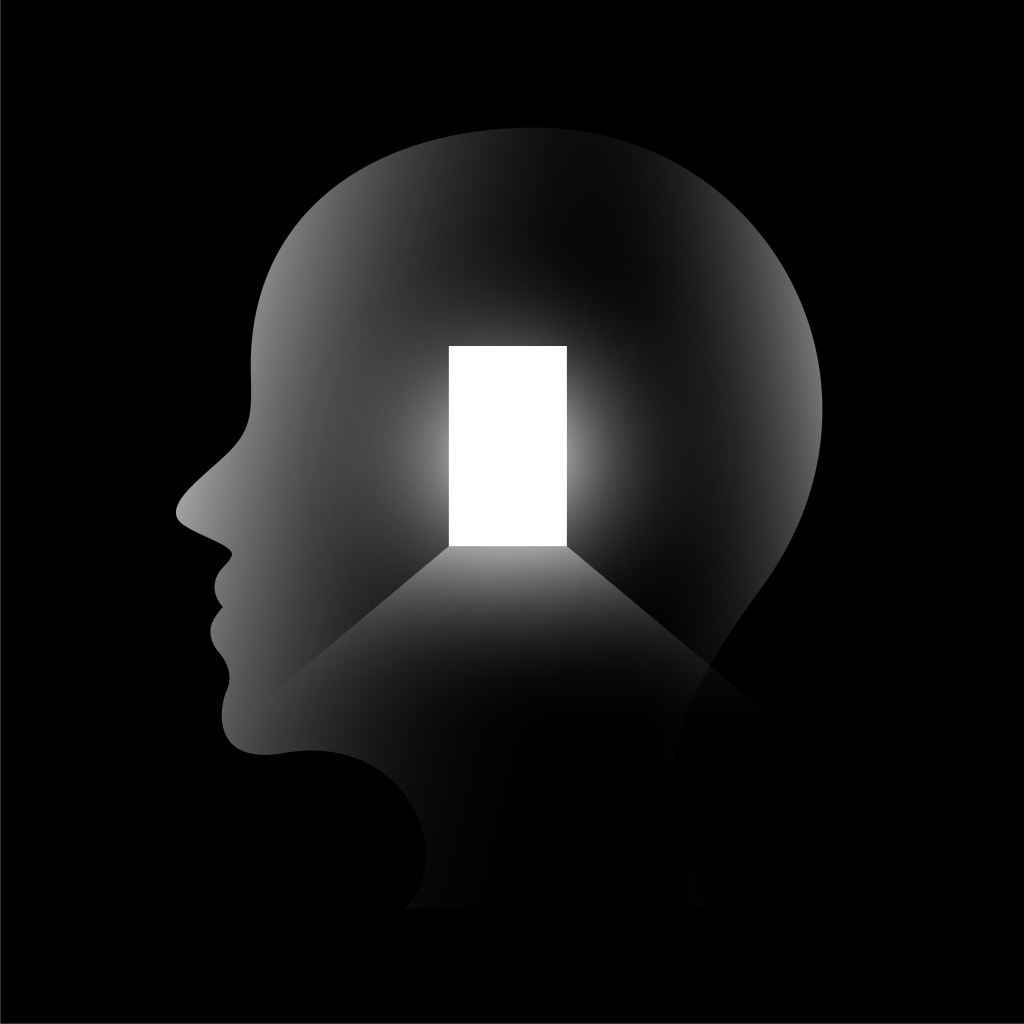
What are unconscious biases? An unconscious bias refers to the ingrained assumptions, beliefs, and associations we hold outside of our conscious awareness. Sometimes also called implicit biases, these mental short codes inform our decision-making and interactions with those around us — without our knowledge.
Charles Ruhl noted he term implicit bias was first coined in 1995 by psychologists Mahzarin Banaji and Anthony Greenwald, who argued that social behavior is largely influenced by unconscious associations and judgments.
A growing body of psychology research points to an uncomfortable truth about decision making. Unconscious bias influences all of us, and even the simplest decisions we make, as noted on the Six Seconds Emotional Intelligence Network website.
Our unconscious biases are not just shaped by our personal history, but also by opinions of people we trust, plus cultural norms, wrote Jory McKay. There are various internal and external factors that creep into our decision-making equation, without our permission or awareness.
Gender, beauty, conformity, affinity, and confirmation are some types of unconscious biases. These biases often arise from trying to find patterns and navigate the overwhelming stimuli in this complicated world. Culture, media, and upbringing can also contribute to the development of such biases.
What is dangerous about implicit bias is that it automatically seeps into a person’s affect or behavior and is outside of the full awareness of that person. These biases are shaped by our cultural environment, upbringing, and firsthand experiences, leading us to make decisions or judgments based on assumptions without being aware of them, reported by MacKay.
We must be concerned, cautioned MacKay, that our unconscious biases are natural. They aren’t necessarily right or fair.
To talk about bias, people often get uncomfortable. The most difficult people to learn about fairness are people who value fairness the most. People who really care about being fair often can push away the idea that there is unconscious bias, commented Kimberly Papillon, Esq. Judicial Lecturer, Neuroscience and Law at Georgetown University.
Papillon stated in a video online that what’s interesting about unconscious bias is that it doesn’t automatically make us bad people. What it does sometimes is make us do things that don’t align with our value system.
The unconscious brain, however, is filled with information that you have stored away over your lifetime, forming unconscious biases. You can change your unconscious biases if you want to, but it will take effort, wrote Rebekah Kuschmider.
Our implicit biases are malleable, which means you can change them, wrote Kuschmider. Since our implicit biases are created from our life experiences, but they can change as we add new and different life experiences.
Our implicit or unconscious biases are different than our conscious thoughts, words, and actions. Our biases are inherently human according to Papillon. We react to what is unfamiliar or threatening to us.
We can learn about ourselves once we learn about our implicit biases with help of others, we challenge ourselves to influence and change our unconsciousness. There are a few ways that I have learned about:
- Challenge yourself to meet new people.
- Connect with people who defy stereotypes,
- Cultivate conscious empathy, and
- Participate in bias training.
- Participate in mindfulness training.
“It is useless to attempt to reason a man out of a thing he was never reasoned into.”
Resources:
Image by starline on Freepik. Retrieved 3/22/2025
CLRN Team. “What is a blind spot in Psychology?” 11/18/2024. Retrieved on 3/12/2025 from https://www.clrn.org/what-is-a-blind-spot-in-psychology.
Georgetown University’s National Center for Cultural Competence. “Two Types of Bias”: Retrieved on 3/14/2025 from https://nccc.georgetown.edu/bias/module3/1.php#:~:text=Implicit%20or%20unconscious%20bias%20operates,full%20awareness%20of%20that%20person
Georgetown University’s National Center for Cultural Competence. “How It Is Possible” How Well-Meaning People Act in Ways that Contradict their Values and Belief Systems.” Retrieved on 3/14/2025 from https://nccc.georgetown.edu/bias/module-3/2.php
“How It Is Possible” How Well-Meaning People Act in Ways that Contradict their Values and Belief Systems”. Retrieved on 3/14/2025 from https://nccc.georgetown.edu/bias/module-3/2.php.
Kuschmider, Rebekah. “How to Unlearn Unconscious Bias.” 821/2021. Retrieved on 3/14/2025 from https://www.webmd.com/balance/features/how-to-unlearn-unconscious-bias.
MacKay, Jory. “How to Overcome Your Unconscious”. October 2024. Retrieved on 3/14/2025 from https://plan.io/blog/unconscious-bias-examples/.
Six Seconds (Emotional Intelligence Network). Retrieved on 3/20/2025 from https://www.6seconds.org/2018/09/04/the-science-of-unconscious-bias-what-colors-our-lenses-why-it-changes-our-decisions-and-how-to-keep-clear/
Ruhl, Charles. “Implicit Bias (Unconscious Bias): Definition & Examples.” 8/2/2023. Retrieved on 3/20/2025 fromhttps://www.simplypsychology.org/implicit-bias.html
 Curious and Creative
Leave a comment