9/22/2025
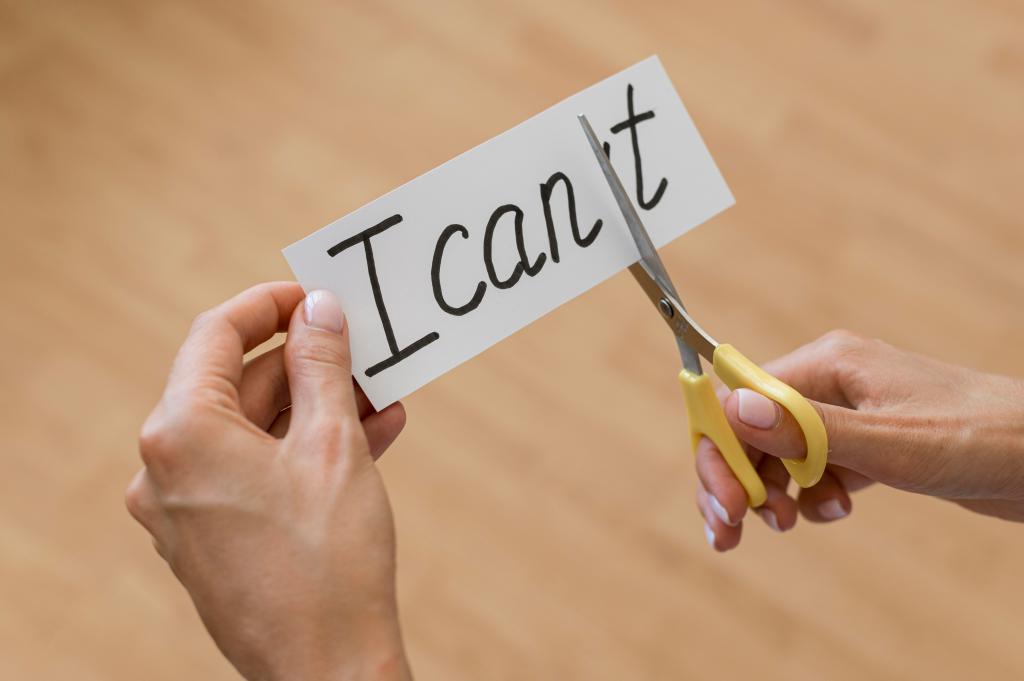
How often do you look back in your life and ask “if only” I had taken a chance? I have. I lacked confidence as a young person; I doubted my writing and speaking abilities. I feared rejection. Instead of testing myself, I held back. I played it safely. After I married and had my kids, I sought jobs with flexibility for my family life. The jobs paid the bills but did not always challenge me.
The “If only” regrets can be difficult to have. Regret is a negative emotion, and it can make us feel worse. The emotions can feel raw. Over the last couple of posts, I have written about regret and the core regrets as defined by social scientist Daniel Pink, author of Power of Regret.
The focus of this post is the Boldness Regret. Pink defines this regret as we play it too safe and are left wondering what could have been. Examples include “If only I’d asked that girl out.”, “If only I’d taken that trip before I had children.”, “If only I’d started that business.”. Boldness regrets arise from the failure to take full advantage of opportunities as a springboard into a potentially more fulfilled life.
As part of a large study, Pink and colleagues set up a website called “The World Regret Survey.” As part of the survey, they asked, “How often do you look back in your life and wish you had done something differently?” And they found 83 percent of the population saying they do that, at least occasionally. It verifies how common this emotion is, especially when we do not label it with that toxic word of “regret.”
According to this study by Pink, there is a profound demographic difference of age related to types of regret. When people are young—say, in their 20s—they have equal numbers of regrets for action (what they did) and regrets for inaction (what they did not do). But as people age into their thirties and certainly 40s, 50s, 60s, 70s, the inaction regrets take over. Inaction regrets are, in general, about twice as prevalent as action regrets. As we get older, what really sticks with us are the regrets about what we did not do.
Deborah Gutfreund is an OCD and trauma therapist. Gutfreund wrote that we can learn from the bold regrets by taking a chance in the future, grab that opportunity to travel, take a class, or ask someone for coffee. Adding, the research reveals that we are more likely to regret what we did not do than what we try, even if it was not a success.
Work-Life performance expert Donna Davis wrote that both regret and disappointment arise when an outcome is not what you wanted, counted on, or thought would happen; but, with disappointment, you often believe the outcome was outside of your control. With so with regret—you believe the outcome was caused by your own decisions or actions. In other words, it is your fault.
The “no regrets” ethos is a strong one, however, Pink points out that this is a dangerous outlook. Adding regret is a marker of a healthy and maturing mind.
Rabbi Effram Goldberg stated no regrets does not mean living with courage, it means living without reflection.
After personal reflection, we can use regret in a positive way to transform our lives.
“You decide every day who you will and will not be. Be bold in your decision but remember, choose wisely.” Joel Brown
Resources:
Image retrieved on 9/17/2025 from https://www.freepik.com/free-photo/i-cant-message-card-being-cut-with-scissor_10424096.htm
Davis, Paula. “The 4 Major Kinds of Regret” Psychology Today. 2/2022.Retrieved on 9/9/2025 from https://www.psychologytoday.com/us/blog/pressure-proof/202202/the-4-major-kinds-of-regret?msockid
Gutfreund, Deborah. “The 4 Regrets to Transform Your Life.” 10/2024. Aish.com. Retrieved on 9/9/2025 from https://aish.com/the-4-regrets-to-transform-your-life/
Jones, Emily Williams. “The 4 Types of Regret (A How They Affect Us.” Psychology for Mental Health. Retrieved on 8/30/2025 from https://psychologyfor.com/the-4-types-of-regret-and-how-they-affect-us/
Mautz, Scott. “On the 4 Core Regrets, a Big Lesson Learned, and More.” “Lead on!” Issue #98: 3/29/2023. Retrieved on 8/24/2025 from https://www.linkedin.com/pulse/issue-98-4-core-regrets-big-lesson-learned-more-scott-mautz/
Pink, Daniel H. The Power of Regret: How Looking Backward Moves Us Forward. Random House Large Print. ©2022
Pink, Daniel H. “Around the World, People have the same 4 regrets.” Retrieved on 8/24/2025 from https://www.linkedin.com/posts/danielpink_around-the-world-people-have-the-same-4-regrets-activity-7237095775535538176-6Zf9/
Pink, Daniel H. “Will We Actually See it? Daniel Pink On the Power of Regret.” Retrieved on 8/25/2025 from https://www.youtube.com/watch?v=m45eymlraJs
Tuhin, Muhammad. “The Neuroscience of Regret: Why it Haunts Us.” 6/23/2025. Retrieved on 8/25/2025 from https://www.sciencenewstoday.org/the-neuroscience-of-regret-why-it-haunts-us
Wattier, Linda.” 4 Types of Regret and How to Leverage Them for a More Fulfilling Life.” Tiny Buddha. Retrieved on 8/30/2025 from https://tinybuddha.com/blog/4-types-of-regret-and-how-to-leverage-them-for-a-more-fulfilling-life/
Wright, Josh. “What is the Power of Regret? A Conversation with Daniel Pink.” Behavioral Scientist. 12/13/2022. Retrieved on 8/24/2025 from https://behavioralscientist.org/what-is-the-power-of-regret-a-conversation-with-daniel-pink/
 Curious and Creative
Leave a comment