February 2, 2026
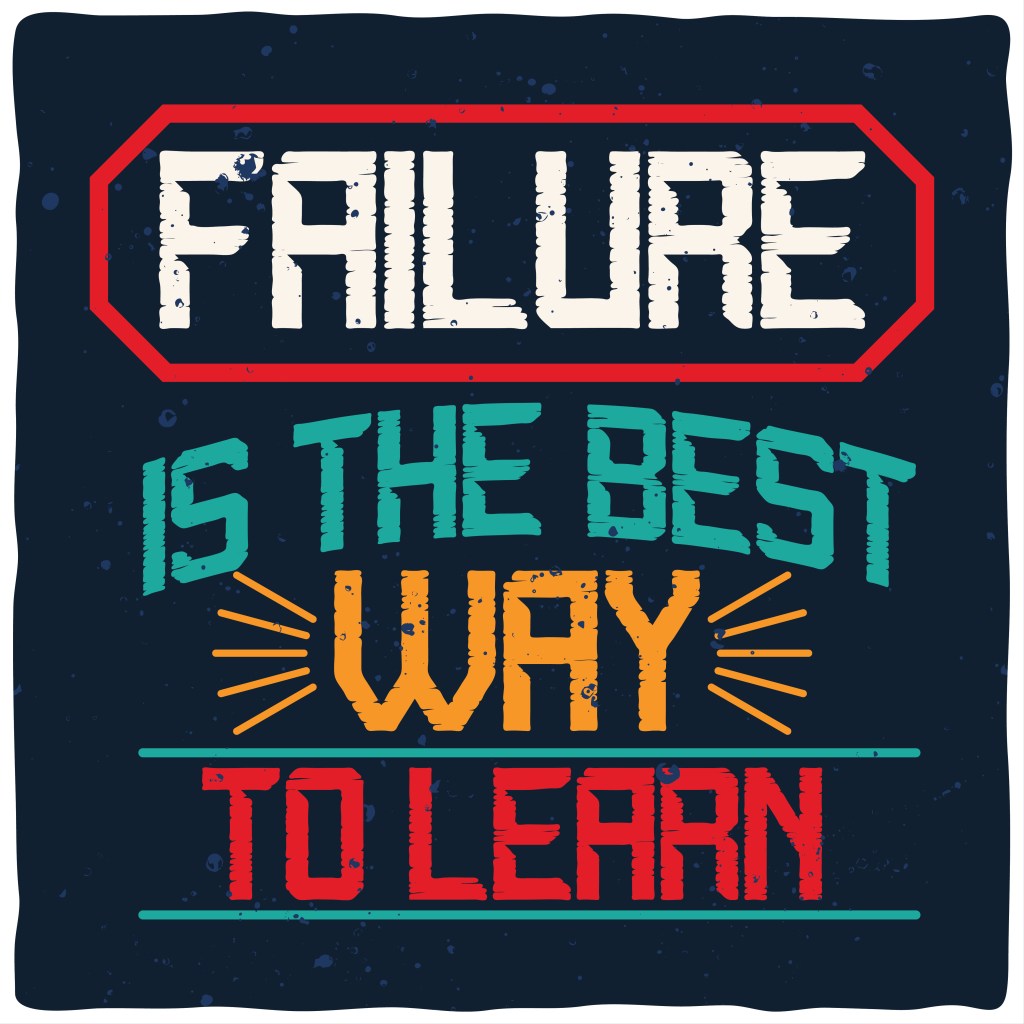
“Failure is difficult and certain,” wrote blogger Delaney Tosh.
It has been a big challenge for me to see failure with a positive perspective, as my anxiety often works in tandem with my fear. If I do not face them both down, anxiety wins. I know in my logical, rational mind that failure has its benefits, but when your confidence and self-esteem are pounded down by anxiety, there is little emotional energy to see past defeat.
Yet, what Tosh wrote resonated with me, “you must do the things that scare you in order to build confidence. You will cultivate confidence through risk, failure and changing how you think.”
I am making strides with change. In the last year, I have embraced curiosity, and it has helped me take more risks. Curiosity encourages me to move out of my comfort zone to try new things. When I see trying new things as experiments, I am less likely to feel down when the tries don’t turn out well. Now, I seek curiosity as a guide out into the darkness of the unknown. It has helped me move past my fears and countered my anxiety.
Opposite of success is not failure, but comfort and taking no risks. In fact, research shows that staying in our comfort zones stifles our growth. Remaining comfortable and secure limits our potential, stifles creativity, and leads to complacency.
Earlier today, I watched a video segment on social media from the top breakfast program on Australian television, Sunrise on Seven, about fear of failure. The show’s hosts interviewed Gary Waldon, reinvention expert, and author of The Art of Reinvention, about failure.
According to Waldon, failing is embarrassing. We do not want to be seen as less than somebody else. We do not want to be seen as less adequate. When we think about failure, we get the sweats.
“We’ve got to change that,” replied Waldon. Failure is about learning. Failure is the process of learning. If we are not failing, we are not growing. If we are not growing, we are stuck,”
Waldon highlighted ways to create a positive “fail” mindset.
- Failure as a learning process, rather than an identity
- Shift the language around failure: Label yourself as a learner.
- Try something new, but do not expect to nail it right away.
- Plan to fail. Retry and go again.
- Start small. You can learn a few things that you can try.
- When you start small, failure is not as big.
- Take it as a learning opportunity and use your failure as a steppingstone.
- Be kinder to yourself and others who fail. We all fail.
- Our brains do not work without failure.
According to Jordan Grumet, M.D. and author of The Purpose Code, comfort will not fulfill you; the arena of effort and struggle will. As humans we are wired for growth. We love the process of getting better at anything.
Where did this idea of comfort zones emerge? According to Jessica Kent, a writer for Harvard.edu, the idea of comfort zones is rooted in research conducted by psychologists Robert M. Yerkes and John Dillingham Dodson in 1908. They developed the Yerkes–Dodson Law, which states that performance increases as stress increases, and performance decreases as stress decreases.
Margie Warrell, Ph.D. wrote that risks we take shape our lives. Yet, our fear holds us back. People hesitate, overthink, and stay within the bounds of comfort, even when they know that real growth lies beyond it. We are wired for self-preservation, we naturally steer ourselves to what is familiar and safe in the short term.
Psychologist Nick Wignall has worked with hundreds of smart, hard working and successful individuals who have constant self-doubt and fear of failure despite impressive achievements and successes.
Wignall points out that there are differences between outcomes and feelings: “I am not a failure. Chances are, I will not be.” Or “I feel like a failure and I am constantly afraid.”
Being aware of this distinction, noted Wignall. It is the first step to understanding the psychology behind how fear and its counterpart, confidence, really work.
I am practicing being better at failing. I know that is strange. It can make a difference in overcoming the fear of failure. I ask myself what I can learn from this situation without letting my emotions override it.
Do not interpret fear as a lack of confidence commented Wignall. Confident people know and believe that it is okay to be afraid, and they do what matters anyway.
According to the website, Mindresilient.com, failure can be the best teacher. Failure is not just an experience it is also an opportunity.
I intend to embrace failure as a teacher, look at opportunities that come from it. My perspective is not going to change overnight. I will keep you in the loop as to how I am faring.
Resources:
Image retrieved on 2/1/2026 from https://www.freepik.com/free-vector/falcon-typeface_11058786.htm > Image by macrovector on Freepik </a>
Grumet, M.D. Jordan. “Don’t Confuse Purpose with Comfort.” 4/5/2025. Retrieved on 2/1/2026 from https://www.psychologytoday.com/us/blog/the-regret-free-life/202504/dont-confuse-purpose-with-comfort?
Kent, Jessica A. “Is It Time to Leave Your Comfort Zone?” 8/28/2023. Harvard.edu. Retrieved on 2/1/2026 from https://summer.harvard.edu/blog/leaving-your-comfort-zone/#Crossing-the-Finish-Line–and-Looking-for-the-Next-Challenge
Mind Resilient. “6 Mindset Shifts That Helped Me Overcome Failure.” 12/21/2024. Retrieved on 2/1/2026 from https://mindresilient.com/the-mindset-that-helped-me-overcome-failure/
Sunrise on seven. TV Morning Show. “Taking Risks for Rewards.” Aired 6/1/2025. Retrieved on 2/1/2026 from https://www.instagram.com/reels/DT6X2-4jwh4/
Temte, Andy. “Self-confidence, Self-Esteem, and Risk Tolerance.” 4/12/2025. Saturday Morning Muse. Retrieved on 2/1/2026 from https://www.andrewtemte.com/saturday-morning-muse/self-confidence-self-esteem-and-risk-tolerance#:
Tosh, CPCC, PCC, Delaney. “Nothing Builds Confidence Like Taking a Risk… and Failing.”10/5/2021. Retrieved on 2/1/2026 from https://www.thecoachingtoolscompany.com/nothing-builds-confidence-like-taking-a-risk-and-failing-delaney-tosh/#
Warrell, Ph.D. Margie. “How The Risks We Take Shape Our Lives (And Why You’re Taking Too Few).” 5/12/2025. Retrieved on 2/1/2026 from https://www.forbes.com/sites/margiewarrell/2025/05/12/how-the-risks-we-take-shape-our-lives-and-why-youre-taking-too-few/
Wignall, Nick. “How to Overcome Fear of Failure.” Retrieved on 2/1/2026 from https://nickwignall.com/how-to-overcome-fear-of-failure/
 Curious and Creative
Leave a comment