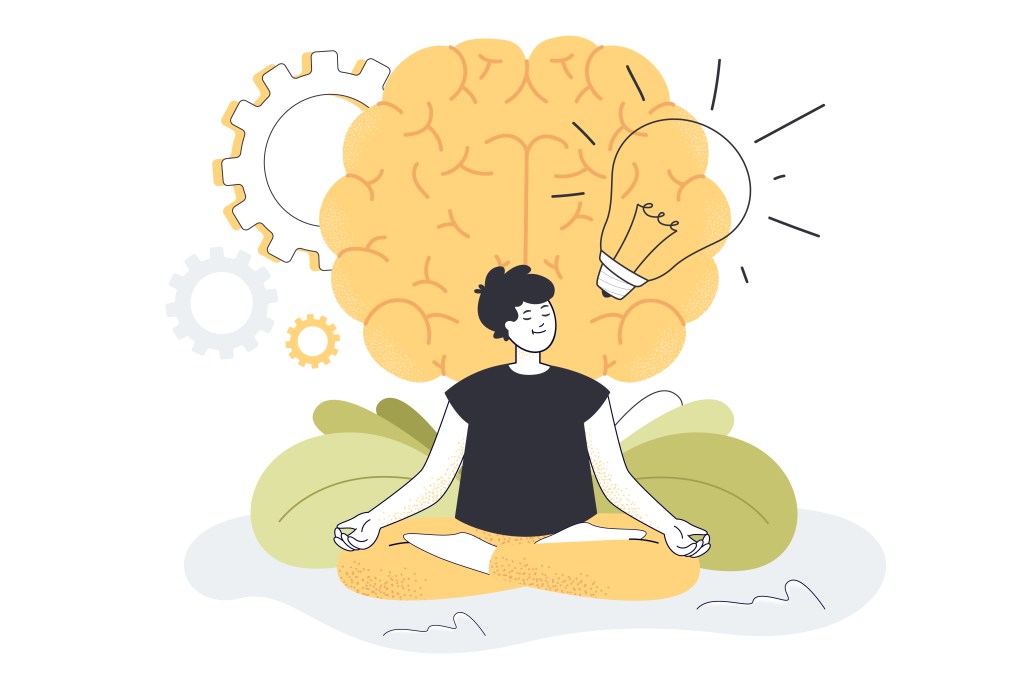
Have you heard the term mindset? Mindsets are cognitive frameworks that dictate how individuals perceive their abilities, challenges, and successes.
Dr. Lauren Braithwaite wrote that the concept of mindset refers to our beliefs about how our intelligence, talents, and personal traits shape how we manage challenges, ultimately affecting our ability to achieve our goals.
“What we think of intelligence, what we think of a smartness, is not fixed, smartness is not stuck in one place, is not permanent. Your brain can improve. Your brain can grow,” stated Khan Academy.
The Stanford University Psychologist and author Dr. Carol S. Dweck first popularized the idea of mindset in 2006 in her book, Mindset: The New Psychology of Success. There are two types of mindsets: fixed and growth. Dweck wrote that beliefs play a pivotal role in what you want and whether you achieve it.
Differences between fixed and growth mindsets:
Individuals with a fixed mindset believe their abilities are fixed traits and therefore cannot be changed. Talent and abilities lead to success; therefore, effort is not required. Those with a fixed mindset often out to prove themselves. They measure themselves by their failures.
Whereas …
Individuals with a growth mindset believe their talents and abilities can be developed over time with effort and persistence. They often show perseverance and resilience when they make errors. Then they try harder next time around.
How does the mindset form? Dweck’s research reveals that two primary sources impact our mindset, both occurring in early childhood: praising and labeling.
Dweck’s research indicated that kids behaved very differently depending on the type of praise that they received. When a child is praised based on talent or is labeled as smart, this can promote a fixed mindset. However, if a child was praised on their efforts and the process that they took. They learned that over time they had control of what they could learn. This is called process praising.
Here are two different ways of using praise:
- “See, you are good at math. You got an A on the test.”
- “I’m impressed by how hard you studied for the math test and the ways you learned to do tricky problems.”
Option A focuses on the talent and ability of the child. Option B focuses on the process the developed and/or used.
Dr. Gary Klein, Ph.D. noted, “Mindsets aren’t just any beliefs. They are beliefs that orient our reactions and tendencies. They serve a number of cognitive functions. They let us frame situations: they direct our attention to the most important cues, so that we’re not overwhelmed with information.”
Kendra Cherry wrote a mindset that influences how people behave in a wide range of situations in life. Our mindsets impact how we think, feel, and behave. What we believe as individuals about ourselves impacts our success or failure. The type of mindset that you hold is critical to coping with life’s challenges, wrote Cherry.
Depending on our mindset, we can tap new opportunities or be trapped in self-defeating cycles, wrote Gary Klein, Ph.D. Experimental Psychology.
In 2024, Penny Zenker, aka “Focusologist”, productivity expert, and author of The Reset Mindset, introduced reset mindset. It is a way of thinking that focuses on dynamic reassessment and the willingness to reinvent according to Penny Zenker.
Think of reset mindset as a deliberate, restorative break designed to clear mental fatigue, reduce stress, and eliminate cognitive overload, functioning like a “reboot” for your brain.
“The reset mindset makes you more conscious of your choices, purposeful in your actions, and targeted toward results,” wrote Zenker.
I do not know about you but there were a few times in last week that I could have used a “brain reboot.”
Over the next few posts, I will be delving into the three different mindsets in more detail. Stay tuned.
“We can’t become what we need to be by remaining what we are.” — Oprah Winfrey
Resources:
Image by pch.vector on Freepik retrieved on 3/8/2026 from https://www.freepik.com/free-vector/young-man-practicing-yoga-exercises-mental-body-health_20827524.htm
Braithwaite, Ph.D. Ed, Lauren. “Fixed Mindset.” The Decision Lab. Retrieved on 3/7/2026 from
Byblow, Carson. “The Mindset of a Champion.” TEDx Youth @AASSofia. 4/11/2018. Retrieved on 3/7/2026 from https://www.youtube.com/watch?v=px9CzSZsa0Y
Cherry, MSED, Kendra. “What is Perception? Recognizing Environmental Stimuli Through the Five Senses.” 11/9/2025. Retrieved from https://www.verywellmind.com/perception-and-the-perceptual-process-2795839
Dweck, Ph.D., Carol S. Mindset: The New Psychology of Success: How We Can Learn to Fulfill Our Potential. Ballentine Books, NY. ©2006.
Dweck, Ph.D. Carol S. “Developing a Growth Mindset with Carol Dweck.” Video. Retrieved on 3/7/2026 from https://www.youtube.com/watch?v=hiiEeMN7vbQ
Fain, Lisa Z. “A Tale of Three Mindsets.” 5/11/2021. Retrieved on 3/7/2026 from https://www.centerformentoring.com/a-tale-of-the-three-mindsets#:~
Huberman, Andrew. “How Feedback Affects Performance-Andrew Huberman-Growth Mindset.” After Skool. 5/28/2024. Retrieved on 3/7/2026 from https://www.youtube.com/watch?v=V9ewjjzAlRs
Khan Academy. “LearnStorm Growth Mindset: The Truth About Your Brain.” Video. 8/10/2018. Retrieved on 3/7/2026 from https://www.youtube.com/watch?v=rf8FX2sI3gU
Klein, Ph.D. Gary. “Mindsets: What are they and why they matter.” 5/1/2016. Retrieved on 3/7/2026 from https://www.psychologytoday.com/us/blog/seeing-what-others-dont/201605/mindsets
TechTello. “Growth Mindset vs. Fixed Mindset.” Video. 8/5/2022. Retrieved on 3/7/2026 from https://www.youtube.com/watch?v=8rNTu_To-Xc&t=4s
Zenker, Penny. The Reset Mindset: How to Get Unstuck, Focus on What Matters Most and Reach Your Goals Faster. Amplify Publishing, VA. ©2024.
 Curious and Creative
Leave a comment