(Building Mental Fortitude: Part 5, Learning to Adapt)
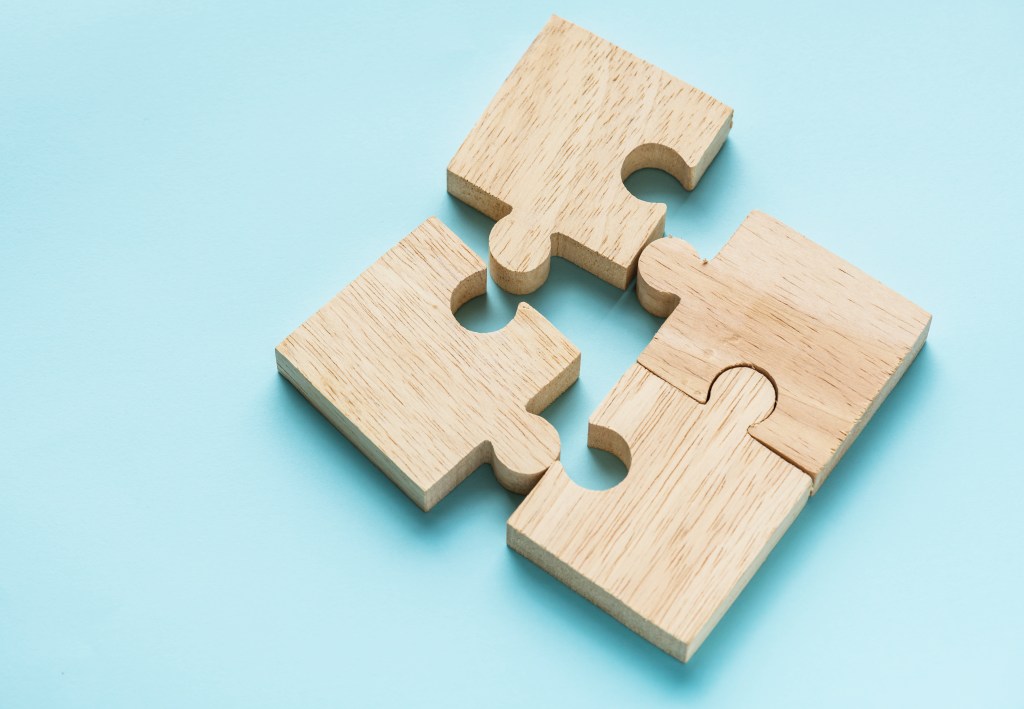
Life can suck. It can be unfair. There can be many times that life does not go as planned; your best laid plans go off the rails. You may have been caught off guard, or then, no matter what you do, it is not going to work. The certainty you had going in can instantly evaporate, and you are faced with the unknown. Can you adapt to the unexpected changes? How do you feel in the moment? Adaptability is a key component in building mental fortitude.
I consider myself adaptable and willing to change direction. I have learned to change plans “on the fly.” Once, my slide show on my computer was not working, so I had to give my speech without a visual aid. Fortunately, I knew my material, and I was able to adapt to the situation. I have had to be flexible at work and at home. I have had to quickly change my approach or make new plans, in order to get things done. I have learned that flexibility is important in becoming more adaptable.
I have had some negative experiences, as well. I felt awkward in large social situations when my plan to network falls apart. I have been taken aback by an unexpected conflict or an embarrassment if I misspoke. I became anxious and very uncomfortable. I excused myself from the situation and room to find a quiet place to vent. As tears welled up in my eyes, I was disappointed in myself that I could not keep it together. I couldn’t think of ways that I could adjust to the situation. I only ruminated about the experience. I felt worse afterwards.
When it comes down to it, adaptability is a skill set. It is your general capacity to adjust, respond, and stay calm when circumstances, environments, or emotions change. Quite frankly, I am still working on the emotional changes. I think that is what trips me up the most, causing me to be ineffective instead of adaptable.
“Adaptability is our ability to adjust to new situations, environments, and emotions,” wrote Rachel Greenhill of Greenhill Counseling. “It is not something we are born with — it’s something we practice through life’s ups and downs.”
According to the website, The Beautiful Truth, adaptation is necessary for one simple reason: our world never stops changing.
When we choose to adapt, instead of giving up, we build our inner strength, noted Greenhill.
For humans, adaptation is an active, conscious process. Our complex brains are capable of abstract thought and social learning; this enables us to devise novel solutions to challenges we face with wrote the editors at TheBeautifulTruth.org.
There are several benefits to being adaptable:
- Reduces your stress.
- Creates greater happiness.
- Improves your resilience. You can become better equipped to face challenges.
- Gives you higher employability.
- Fosters your creativity.
- Increases your job value.
- Makes you a better leader.
- Improves your critical thinking skills.
- Become resilient. Enabling you to better handle unforeseen changes.
How can you become more adaptable? Here are some suggestions:
- Engage in small experiments. Evaluate minor changes. Explore alternatives.
- Be a continuous learner.
- It is okay to make mistakes. Keep an open mind.
- Improve problem solving. Break challenges into concrete steps.
- Embrace ambiguity and become comfortable with uncertainty. You are not going to have perfect situations. You will not have 100 percent of the information to make decisions. There will be things out of your control.
- Step out of your comfort zone. Do not be constrained by a narrow focus.
- Develop plans. Where do you need to be to achieve this?
- See the big picture.
- Learn to manage your reactions and try to understand others’ perspectives.
“Adaptability isn’t about embracing every new trend,” according to the School of Life for The Beautiful Truth website, “but developing the capacity to navigate change with intention, balance and confidence.”
H.G Wells said, “Adapt or perish, now as ever, is Nature’s inexcusable imperative.”
Resources:
Image by rawpixel.com on Magnific. Retrieved on 10/8/2026 from https://www.magnific.com/free-photo/jigsaw-teamwork-concept-macro-shot_3533798.htm
The Beautiful Life. “Work Like a Human: How to be More Adaptable.” 6/13/2025. Retrieved on 106/2026 from https://thebeautifultruth.org/the-school-of-life-x-the-beautiful-truth/work-like-a-human-how-to-be-more-adaptable/
Pradeepa, Sanju.” Flexibility vs. Adaptability: A Comparison Between Them.” 5/30/2024. Retrieved on 10/3/2026 from https://www.believeinmind.com/self-growth/flexibility-vs-adaptability/
Greenhill, Rachel. “Learning to Pivot: The Art of Adaptability and Resilience.” 10/22/2025. Retrieved on 10/6/2026 from https://greenhillcounselling.com.au/blog/learning-to-pivot-the-art-of-adaptability-and-resilience/
Harvey, Russell. “The Benefits of Being Adaptable.” Retrieved on 10/6/2026 from https://www.theresiliencecoach.co.uk/blog/the-benefits-of-adaptability
Lyra Practice. “Pivot or Adapt: What’s the Difference.”8/10/2026. Retrieved on 10/6/2026 from https://lyrapractice.com/blog/pivot-vs-adapt-whats-the-difference/
Spevak, Frank. “8 Steps to be a More Adaptable Person and Organization. 6/5/2020. Retrieved on 10/6/2026 from https://medium.com/an-idea/8-steps-to-be-a-more-adaptable-person-and-organization-8e7362804dfc
Thompson, Julie. “Adaptability Skills: The Importance of Being Adaptable in Business.” 9/15/2026. Retrieved on 10/6/2026 from https://www.business.com/articles/how-well-do-you-handle-change-the-benefits-of-being-adaptable/


Leave a Reply