June 9, 2026
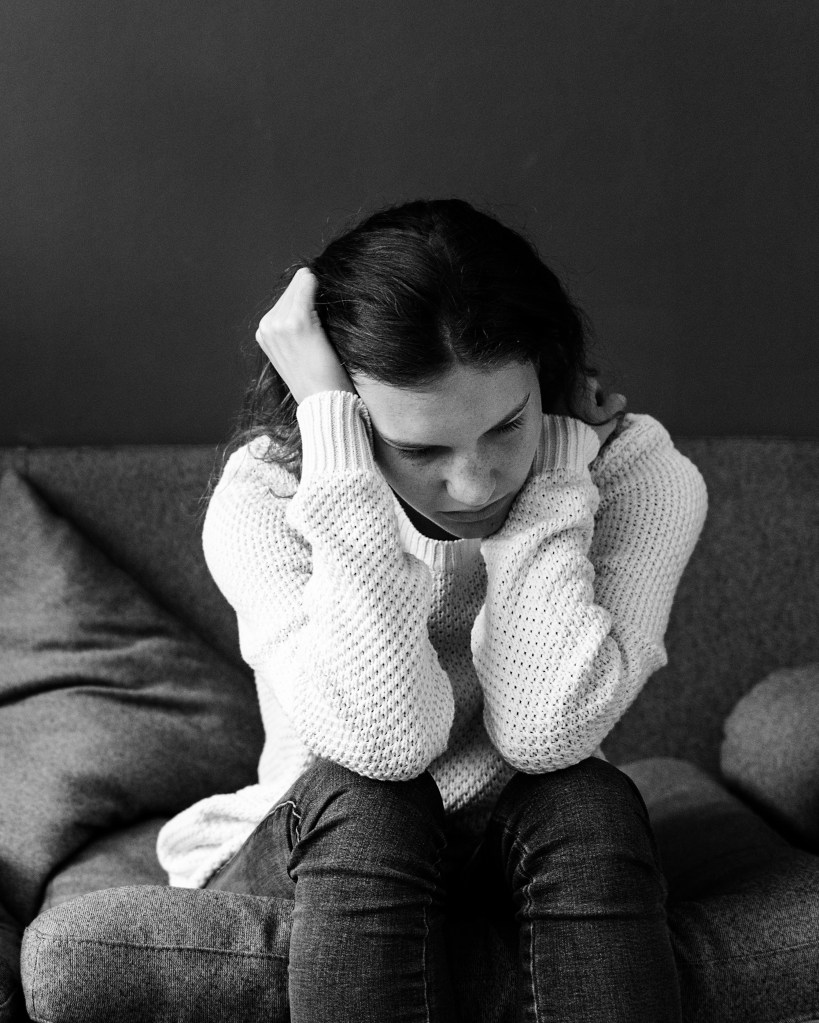
Have you ever met a thief so adept at stealing what is yours, yet you are bound by worry and anxiety and are not able to fight back? Anxiety is that thief, and it steals your brilliance. Anxiety creeps in like a thief – it attacks, it talks, it distracts, and it lies to us.
I am an anxious person. I am also a parent of a young adult who is anxious. I have seen how anxiety works. I have felt the physical impact of anxiety on myself and seen the impact of anxiety on my son. He has experienced heart palpitations, racing heart, trembling hands, sweaty and clammy palms. As he has told me, it feels as if he has a heart attack or stroke.
I have experienced anxiety for many years. I take an anti-anxiety medication to help soften the blows that anxiety makes. Anxiety makes everything look bad. I described anxiety as a rogue wave hitting my backside as I stood on the beach in the surf. At other times, anxiety feels like a huge elephant sitting on my chest.
Once we start feeling anxiety in our bodies, the brain sends the signal, “if you do not stop feeling like this, something bad is going to happen. You are going to die.”
“Anxiety traps our cognitive bandwidth in a ‘fight-or-flight’ loop, causing us to overthink, second-guess our instincts, and lose access to our true creative and intellectual brilliance,” stated the CDC.
Anxiety takes our executive function off-line and makes inaccessible. This is a big challenge as executive functioning helps us make decisions and plan.
Anxiety can affect all ages of people, across racial barriers, socioeconomic status, and level of education. Anxiety just does not care who you are, where you are, what you know, or what you have planned for the day. Anxiety has shown genetic links that can be familial.
According to the CDC, many people worry, and it is a normal part of life. Worry is temporary and fades when the situation resolves. When worrying happens a lot and becomes hard to contro, the CDC recommends getting help from a professional.
Worry tends to reside in our minds and rarely causes physical reactions; however, anxiety does trigger systemic body responses, noted the CDC.
Symptoms of anxiety include:
- Feeling restless, agitated, or on edge
- Getting tired easily
- Trouble concentrating
- Feeling irritable
- Experiencing muscle tension or knots
- Trouble sleeping, falling asleep or staying asleep.
Have you ever experienced any of the above listed physical symptoms more days than not for at least six months? Consider speaking with a healthcare provider or licensed mental health professional.
“Anxiety has three main components: emotional, physiological, and cognitive,” wrote Luana Marques, PhD.
Anxiety in itself is not bad, wrote Marques. Normal levels of anxiety lie on one end of a spectrum and may present as low levels of fear or apprehension, mild sensations of muscle tightness and sweating, or doubts about your ability to complete a task, wrote Marques.
“Worry can be like the crack cocaine of anxiety,” wrote Karen Cassaday, PhD.. “Once you get sucked into it, you cannot stop. It feels like you are thinking about important things even though it makes you feel miserable.”
Anxiety disorders are characterized by severe, persistent worry that is excessive for the situation, and extreme avoidance of anxiety-provoking situations. These symptoms cause distress, impair daily functioning, and occur for a significant period.
“In moments like these, anxiety takes hold of the brain and leads it into a spin. This spin also affects our nervous system,” wrote Helen Su, adding, anxiety about anxiety keeps anxiety going.
Authot Colleen Kessler wrote, “Anxiety doesn’t just lie, either – it steals. It steals your peace, your comfort, steals moments and taints memories.”
Remember, that the worst part of the lies that anxiety tells you that contains a shred of truth. Anxiety has mastered this, wrote Kessler.
I have experienced this myself. Anxiety is loaded with fear and then loads us with fear. When we are in anxiety itself, it does not seem to end.
Ways to reduce and quiet anxiety:
- Be active. Take a walk, stress or another physical activity.
- Connect with others. Reach out to friends, family, neighbors, or your faith community.
- Turn off the news and take a break from social media. Watching news increases feelings of stress.
- Practice mindfulness. Take 5 to 10 minutes to tune into yourself. Apps like Calm or Thrive offer music, stories, and meditations to help reduce your anxiety.
- Challenge negative thoughts. If you often think, “I cannot do this,” or “I’m stuck,” try asking yourself, is this true and is it helpful.
- Get comfortable. Anxiety can cause avoidance, but learning to expose yourself to what you anxious about in small doses, you can then build up tolerance.
- Get help from a professional, particularly if your worry and anxiety does not go away.
Perhaps it is time to stop believing the lies anxiety tells us, stop it from claiming more of our lives. Take back your brilliance.
“Anxiety does not empty tomorrow of its sorrows, but only empties today of its strength.” — Charles Spurgeon
Resources:
Image by rawpixel.com on Magnific. Retrieved on 6/7/2026 from https://www.magnific.com/free-photo/stressed-teenager-sitting-sofa_19085993.htm
Blumenthal, Pat.. ”Anxiety is the Greatest Thief of All Time.” The Huff Post. 7/25/2016. Retrieved on 6/3/2026 from https://www.huffpost.com/entry/anxiety-is-the-greatest-t_b_11166592
Cassiday, PhD, ACT., Karen. “Why You Shouldn’t Believe in Your Worry?” Anxiety & Depression Association of America.
CDC. “Worry and Anxiety.” Retrieved on 6/7/2026 from https://www.cdc.gov/howrightnow/emotion/worry/index.html
Henry Ford Health. “Worry and Anxiety: Do You Know the Difference?” 8/21/2020. Retrieved on 6/3/2026 from https://www.henryford.com/blog/2020/08/the-difference-between-worry-and-anxiety#
Kessler, M.Ed, Collen. “Helping Our Children: The Lies Anxiety Tells Us.” https://raisinglifelonglearners.com/the-lies-anxiety-tells-you/
Marques, PhD. Luana. “Do I have anxiety or worry: What’s the difference?” 10/27/2020. Retrieved on 6/3/2026 from https://www.health.harvard.edu/blog/do-i-have-anxiety-or-worry-whats-the-difference-2018072314303
Su, Helen. “What is it about Anxiety that makes it scary?” 6/1/2023. Retrieved on 6/3/2026 from https://www.brightmindpsychology.com.au/single-post/what-is-anxiety


Leave a Reply