October 28, 2026
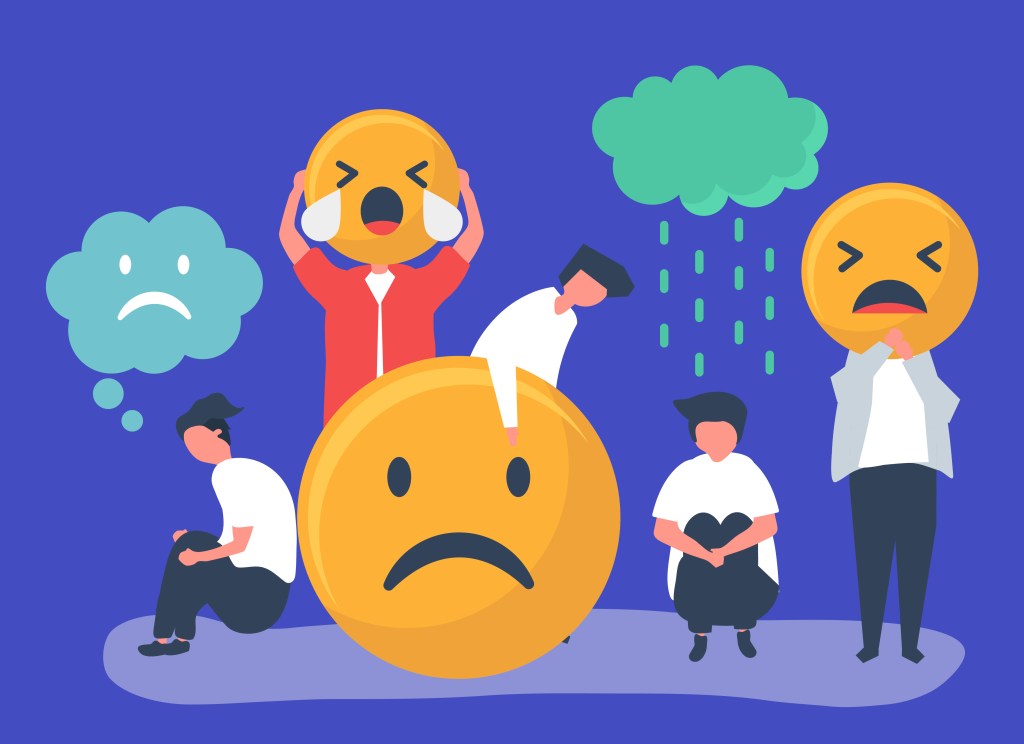
If I am caught off guard, I gasp and get startled. If someone says something hurtful, my body reacts, then tears pool in my eyes. If I feel frustrated, I can feel my temperature rising and my palms begin to sweat. Research shows that our bodies react before we are even conscious of our feelings.
Emotions are often confused with feelings and moods, but the three terms are not interchangeable, wrote Psychology and Counseling News editor at the University of West Alabama.
I knew from experience that we can feel our emotions in our bodies. I did not realize so much went into it without our consciousness. According to the NeuroLaunch website, emotions are biological events. First, as your body does not wait for instructions, it reacts. Other neurological sources concur that emotions are quick, intense chemical and physiological responses to specific internal or external events that last seconds to minutes. They originate in subcortical brain structures, like the amygdala.
There are three brain regions involved in making emotions: amygdala, hypothalamus, and the limbic system, according to Renewed Mental Health Group.
To put it simply, emotions are intense, short-lived reactions. Feelings are subjective experiences shaped by interpretations, while moods are sustained emotional states influencing overall disposition, wrote LCSW and counselor Michael Vallejo
Emotions push you toward immediate action. Feeling shape how you interpret the options in front of you. Moods are the most insidious influence on judgment because they operate farthest from conscious awareness, noted the NeuroLaunch editorial team.
Emotions are like your body’s internal radar system. They show up quickly and ripple through your body, wrote Michael Miller and Alexandra T. Olsson.
Whereas, feelings are our conscious experiences. This is where feelings become personal. After your amygdala fires and your body shifts into a physiological state, then your cortex steps in. Feelings are what happen when your brain starts to process emotional chemicals. They are more complex and layered.
Moods are a disposition to respond emotionally in a particular way that may last hours, days, or even weeks. It is a low level and without the person knowing what prompted that state. Moods tend to echo emotions, like happiness or sadness. They are less intense and more persistent than they can last for a period.
Think of moods as the weather patterns. It is your emotional weather system. A mood can tint how we interpret what is happening, noted Miller and Olsson. They added that moods are shaped by many things like your environment, your body, health, and your mind.
Neuroscience experts at the Dana Foundation stated that while emotions tend to be linked to a particular person or event, moods may not be connected to any obvious cause.
“After years of asking the question “How do you feel right now,” in therapeutic contexts, it is clear that, generally speaking, most of us have a very limited vocabulary when it comes to emotions, to feelings and moods,” wrote counselor and group facilitator Cris Rieder. He commented that people have never been educated in depth about emotions.
According to Cognitive Behavioral Therapy Los Angeles, there are three component models of emotions. Thoughts create feelings, feelings create behavior, and behavior reinforces thoughts. If you want to learn to manage your mood and act more effectively in the face of challenging situations, it is crucial to develop the ability to identify and distinguish between thoughts, feelings, and behaviors.
Experiencing emotions is ordinary but experiencing them intensely as some people do may be, due to genetics. According to research, twenty to sixty percent of a person’s temperament is impacted by one’s genetics. Another study revealed other forty-seven percent of the differences in sensitivity between twins were genetic.
Interestingly, cultures have been impacting on how human emotions are expressed, noted Vallejo. Some cultures encourage open displays of emotions, while others value restraint and emotional control.
Have you ever wondered what someone was feeling and thinking based on their non-verbal body language? There are ongoing studies on physical responses to emotion. What I found interesting is that our facial expressions play a key role in responding accordingly to an emotion in a physical sense.
Although emotions, feelings, and moods are distinctly different, and these terms cannot be used interchangeably, they are, however, interconnected mental states. Moods, feelings, and emotions have a significant impact on the lives of individuals and result in their varied experiences, actions, and behaviors, noted by the Renewed Mental Health Group.
“I gave myself permission to feel and experience all of my emotions. In order to do that, I had to stop being afraid to feel. In order to do that, I taught myself to believe that no matter what I felt or what happened when I felt it, I would be okay.” –Iyanla Vanzant
Resources:
Image by @rawpixel-com. Retrieved on 10/26/2026 from https://www.magnific.com/free-vector/people-with-depression-unhappiness_3585224.htm
Cognitive Behavioral Therapy Los Angeles. “Part 3: The CBT Triangle: How Thoughts, Feelings, and Behaviors Connect.” Retrieved on 10/25/2026 from https://cogbtherapy.com/cbt-model-of-emotions
Dana.Org. “Understanding Mood.” 9/20/2023. Retrieved on 10/25/2026 from https://dana.org/resources/understanding-mood/#:~:text=What%20is%20mood%2C%20exactly%3F,emotions.%20Brain%20regions%20including%20the
Miller, Michael, and Alexandra Tanon Olssson.” Emotions, Feelings & Moods: What’s the Difference and Why It Matters.” Retrieved on 10/26/2026 from https://www.6seconds.org/2022/07/15/emotion-feeling-mood/
NeuroLaunch Editorial Team. “Emotion vs Feeling vs Mood: Unraveling the Psychological Trio. 10/18/2024. Retrieved on 10/26/2026 from https://neurolaunch.com/emotion-vs-feeling-vs-mood/
Renewed Editorial Team. “Understanding Moods, Feelings, and Emotions: Key Differences and Practical Insights.” 1/27/2025. Retrieved on 10/25/2026 from https://renewedmentalhealthgroup.com/understanding-moods-feelings-and-emotions-key-differences-and-practical-insights/
Rieder, Cris. “Emotions, Feelings, Moods…The Forces That Move Us.” Retrieved on 10/25/2026 from https://www.crisrieder.org/thejourney/emotions-feelings-moods-forces-that-move-us/
Smith, Tiffany Watt. The Book of Human Emotions: An Encyclopedia of Feeling from Anger to Wanderlust. Profile Books. Welcome collection. ©2015.
University of West Alabama. “The Science of Emotion: Exploring the Basics of Emotional Psychology. “Psychology and Counseling News. 6/27/2019. Retrieved on 10/25/2026 from https://online.uwa.edu/news/emotional-psychology/
Vanzant, Iyanla. Quote. Retrieved on 10/26/2026 from https://www.brainyquote.com/quotes/iyanla_vanzant_519947
Vallejo, LCSW, Michael. “Emotions vs. Feelings vs. Moods.”12/1/2023. Retrieved on 10/26/2026 from https://mentalhealthcenterkids.com/blogs/articles/emotions-vs-feelings-vs-moods


Leave a Reply